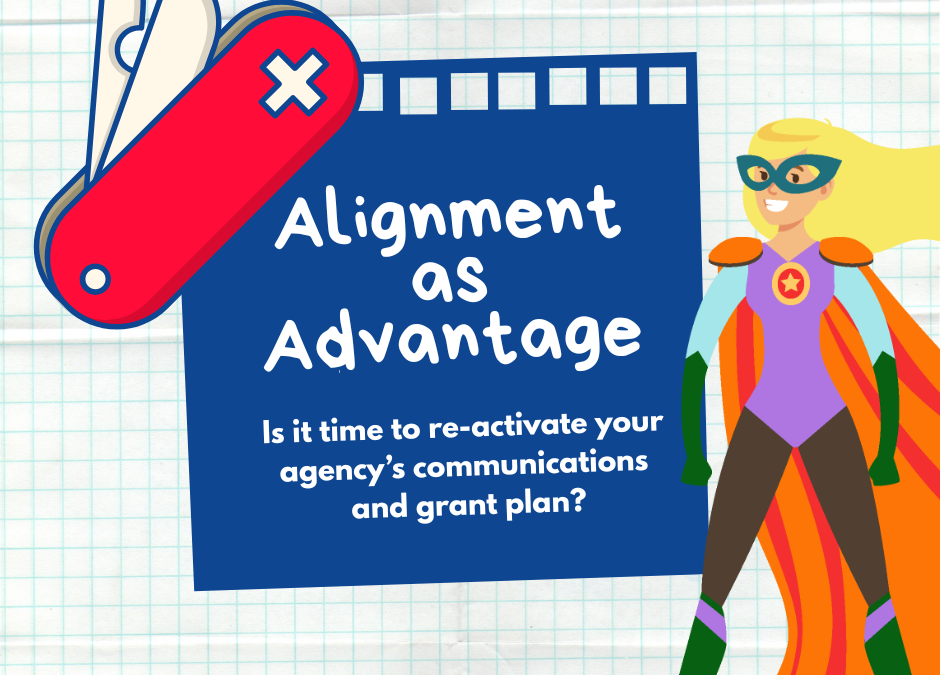
Often described by my clients as the “Swiss Army knife” of nonprofit consultants, and as President and CEO of Arts In Action Consulting Firm, I have built a career supporting charitable organizations through integrated grant writing, communications, and highly effective fundraising messaging. In 2025 alone, Arts In Acton raised more than $9.1 million for our nonprofit clients across a range of missions and geographies. That success underscores a broader strategic truth in the sector: when one firm is responsible for both communications and grant strategy, nonprofits benefit from greater clarity, consistency, and impact across every audience touchpoint.
At its core, unified oversight eliminates the fragmentation that often undermines nonprofit messaging. When communications and grant writing are handled by different vendors or internal silos, organizations risk inconsistent language, misaligned priorities, and diluted value propositions. A single firm managing both functions ensures that mission statements, program descriptions, outcomes data, and equity narratives are articulated consistently—whether in a federal grant application, a foundation proposal, a donor appeal, or a public-facing impact report. This cohesion strengthens credibility with funders and reinforces trust with donors and community stakeholders.
Strategic alignment also improves efficiency and speed. Grant deadlines are unforgiving, and communications calendars are often packed. When one firm oversees both, institutional knowledge is centralized rather than repeatedly re-created. Program data, metrics, and stories flow seamlessly from internal reporting to external narratives, reducing redundancies and minimizing the risk of errors. This streamlined process allows nonprofits to respond quickly to funding opportunities, tailor messaging without starting from scratch, and maintain momentum during high-stakes fundraising cycles.
Equally important, unified leadership enables more sophisticated storytelling. Grant writers and communications strategists working from the same playbook can translate complex programs and outcomes into compelling narratives that resonate across audiences. Impact data gathered for grants can be repurposed into donor communications, board materials, and media pitches, ensuring that every story told reinforces the same strategic themes. Over time, this repetition—intentional and disciplined—builds a strong, recognizable brand voice that funders and donors come to associate with professionalism and results.
Finally, a single firm accountable for both planning and execution creates clearer ownership and measurable results. Rather than diffused responsibility, nonprofits gain a true strategic partner invested in long-term growth, sustainability, and reputation. As demonstrated by firms like Arts In Action, this integrated model does more than raise money—it builds alignment, sharpens messaging, and positions nonprofits to compete effectively in an increasingly crowded funding landscape. In an environment where clarity and trust are currency, unity of voice is not a luxury; it is a strategic advantage. Is it time for your organization to re-activate your grant strategy? If so, DM me or set up a free consultation appointment at this link so we can discuss your 2026 grant plan: https://calendly.com/gracealfiero/30min?month=2026-01
Recent Comments